What is Depression about?

Depression
Depression or sadness afflicts most one time or another in their lives. Depress the public may have different strength and many symptoms. Two typical symptoms particularly marked in the workplace is that they have trouble concentrating and making decisions, and that they lack energy. Other symptoms are that you feel worthless or have an unusually high sense of guilt, a sense of hopelessness, little pleasure or interest in various activities, and sleep excessively or small.

Some prefer to withdraw and be alone, others react by becoming abnormally restless and agitated. Suicidal thoughts may be present in deeper depression. Depression is often accompanied by symptoms of anxiety. Prolonged stress at work or private can trigger depression. Depression is not uncommon during pregnancy and after birth.

Treatment with therapy and possibly medication is appropriate if the depression has a certain strength and lasting more than two weeks, or if, over time, repeated short depression. The doctor can evaluate symptoms using a test form.

Fatigue and lack of energy in winter is often referred to as winter depression, but some experts believe that this is not a depression. Winter Depression can be treated with daylight lamps.

Burnout

Condition characterized by fatigue, concentration problems, fatigue and poor sleep. Some are ampre and irritable. Burnout is not a psychiatric diagnosis, but the condition increases the risk of depression and physical ailments.
»»  read more

What is Deficit Hyperactivity Disorder?

ADHD
(Attention problems and hyperactivity, Attention Deficit Hyperactivity Disorder).

Most people with ADHD become functioning adults although they may have slightly greater loss of concentration and be more impulsive and talkative than their counterparts. Turbulence or hyperactivity and impulsiveness are apparent in childhood and attenuated gradually. Interests, motivation and personal equipment weighing up to concentration problems. Only a minority can not schooling and job and falls completely outside of society.

A small group struggles between professional life and have difficulty making friends and developing friendships. The problem is that they are often impulsive, talking in one set, the continual thoughts and initiate projects that they fail to follow up. In order to prevent conflicts in the workplace can in troubled cases be useful to make a clear agreement between the employer and employee. For example, the contract may be fixed office hours. For others it may be best that employers ignore regular office hours as long as projects are executed on time.

Payment of wages more frequently than once a month, or permanent move from salary account, preventing impulsive spending and economic problems. Medications can be helpful also for adults. It is estimated that one out of 20 have ADHD in mild or greater extent.


»»  read more

Bipolar disorder medication

Bipolar Disorder
A craze involves having periods when one is "high." If there is an easy craze, called hypomania, one can live with it. Develops into a "full" manic state, you can experience the mind "races off," you can go almost without sleep and get uncritical behavior. Some may throw hurtful and reckless remarks to colleagues in this phase. Self-confidence is huge, it can develop into megalomania and behavior where one does things you would never dream of doing. It requires competent medical help.

Mania often breaks out in conjunction with intense periods of work and stress. Stress may be that you have too much to do, that there are conflicts at work, or that there are other personal stresses. Sleep deprivation can trigger both mania and be a part of it. For employers, it is important to recognize the symptoms so that they get sick leave and help to calm down when he or she notices that a craze may be on the way. It is also important that you do not get the opportunity to lead risky activities during periods of illness.

Someone with a diagnosis of bipolar disorder may be affected by only one or two manic periods in their lives, others have multiple episodes. After a manic period, you often get a depressive period in which they have little energy, the need to isolate themselves, and where they are struggling with low self-esteem and inferiority. Some have deep depression, but can only facilitate mania. An estimated 600-700 people a year diagnosed with bipolar disorder. The disease often begins before the age of 30. Medicines and knowledge of warning signs is a great help. People with a bipolar diagnosis can be an important asset to your business if the work is put in place.
»»  read more

What is Anxiety disorders?

Anxiety disorders are multiple:

Generalized anxiety disorder involves struggling with exaggerated concerns. One can not, for example not to worry about the economy, the health of children or burglars. The concerns can lead to being awake and getting sleep deprivation.

Panic means that one may suffer from bouts of severe palpitations, sweating, trembling, intense feeling of dread. Seizures are often dramatic, and it is quite common for people to think there is something seriously wrong.

Social phobia or social anxiety means that you are afraid to be noticed, to be in focus. Some have so many complaints that they struggle to go in the cafeteria or present a paper to colleagues at work because it is uncomfortable when other people look at one.

Obsessive-compulsive disorder: Is there a compulsive disorder, you have unpleasant thoughts that you have trouble getting rid of, and that leads to compulsive behavior. One can, for example, an intense feeling of being dirty and unclean when taking other people or objects. Anxiety when you wash them. This can develop into large washing rituals.

Specific phobia: This may be phobia or fear of insects, snakes or dentists. One can have such a phobia without being bothered by other forms of anxiety.

It is estimated that one in four gets some form of anxiety in their lives. Often accompanied anxiety and depression ad. Behavioral therapy, talk therapy and possibly medication may be helpful.</div>
»»  read more

What is Psychosomatic disorders

Psychosomatic disorders
Psychosomatic disorders are physical disorders that are wholly or partially caused by mental or emotional problems. One example is the stress causing muscle tension in the neck with neck pain and headaches. Others may get muscle tension in the back and back pain. Traumatic life experiences can "put themselves in the body" and cause pain of various kinds.

Psychological problems can also aggravate clear bodily diseases, for example, stomach ulcers, angina and arthritis flare up during periods of great stress.

Stress causes the production of stress hormones, which in turn affects the muscles, intestines, heart and other organs. Fibromyalgia is muscle pain and muscle soreness in the body. Many of those affected, said the problems began with prolonged stress. If one is "awake enough" to do something with the symptoms in time, can prevent disease.


After two or three years with chronic muscle tension can be hurting everywhere and have major problems. It will take longer to recover.

»»  read more

What is psychosis disorder?

Psychosis
The main symptoms of a psychosis is a distorted perception of reality, often with auditory hallucinations or other perceptual disturbances, confusion or altered behavior.

Common delusions is that the patient feels directly persecuted, thinks people are out to harm another, they form a conspiracy, spying through the car windows, wiretapping phone or food poisoning. Strong jealousy is another symptom, or you have ideas of their own greatness, know that you have special skills or tasks in life or feel powerful or divine. People diagnosed with schizophrenia, manic-depressive disorder or dementia often have clear symptoms of psychosis.

Psychosis can be chronic or intermittent. Transient psychosis can occur at high loads, severe sleep deprivation, physical illness or due to medications and drugs.

The paranoid psychosis is also a special form. Under this condition, one has only one type of delusion or a set delusions similar to each other. It may be that they feel persecuted, being extremely jealous, being big headed, extremely cavil or that one imagines that one is poisoned or infected with a dangerous disease.
»»  read more

Eating Disorders

Eating Disorders
Eating disorders are usually divided into three main types: anorexia, bulimia and compulsive eating.

In all forms of eating disorders are considered the focus on food and body as symptoms of underlying psychological problems.

When anorexia patient attempts consciously to lose weight even if their weight is basically normal. The person often has a distorted perception of their own bodies. The disorder often causes severe hormonal disorders and delayed development in very young people.

At bulimia have been repeated bouts of overeating and are overly concerned with control of body weight. The person often uses extreme methods to purify themselves by over eating, such as bowel medications or induced vomiting.

When forced eating, we often have a similar eating patterns in bulimia, but the person keeps the food. Binge eating can lead to obesity, but also to large weight fluctuations or normal weight at that person over exercising or dieting periods.
»»  read more

Ultrasound examination with contrast

Ultrasound examination with contrast
Ultrasound examination of injuries in the musculoskeletal apparatus can sometimes be challenging. Some patients are less "ultrasonic friendly" due to skin type, tissue or fat mass. This can cause degradation and thus an inaccurate diagnosis.

On Apexklinikken we have the technology and expertise to perform a so-called contrast examination. This does not differ significantly from the contra investigations carried out in connection with, among other MR arthrography (magnetic imaging with the contrast injection into the joints), but are associated with less risk of side effects.

Use of liquid contrast
Fluid produced an echo poor area on an ultrasound image. The sound waves are passed into the tissue through the ultrasound probe is moving very quickly through the liquid, as compared with the speed in other tissues. This produces a phenomenon called enhancement of ultrasound language. All that is deeper than the area of ​​fluid produced in the ultrasound screen with clearer details and more powerful signal.

In addition, an ultrasound image only an echo of the audio signals sent into the tissue. This leaves room for errors. Upon rupture of a tendon then done by a static image is not always able to produce damage to the tissue seems to be as it should. By setting tissue tension, one can then in some cases, see the damage open up and be prepared in our screen. The problem pops up when including a rupture is not vertical but horizontal. This will not be such a stretch of the tissues giving more information. Fluid is injected around the suspected damage will circulate into the cracks / damage when the injection pressure increases and thus produce injury in a superb way.

Where appropriate contrast ultrasound itself?
The use of contrast is particularly relevant in damage rotatormansjetten shoulder. The four muscles that encircleth humeral head to the upper arm bone has a number of important roles in shoulder function, and damage to one or more of these can cause pain and reduced function. By setting a contrast of the mucus bag enclosing these 4 tendon attachment then one will in an efficient manner to produce the extent of any damage. Rupture (tear-off) that would otherwise be overlooked seen more clearly when the liquid fills the injury site.

Contrast injection into joints may also be useful for assessing including meniscus and joints lips (cartilage discs), where small subtle damage can also represent substantially pain and functional impairment for the person concerned. The use of this diagnostic method puts great demands on the investigator when it comes to clinical and sonographic skills. Such damage can sometimes be difficult to find on a conventional MR examination, and the gold standard MR arthrography (MRI with contrast). An MR arthrography costs today over 3000 kr performed at a private radiology department.

Damage to tendons, tendon attachments, ligaments and musculature can also be difficult to determine when to define the extent of the damage. A contrast examination with ultrasound can provide more information about the extent of the damage and thus the need for surgery or other treatment.

The method
The technical implementation of the contrast study is not very complicated. One must first perform a physical examination where there are a working diagnosis. This gives the investigator a number of possible scenariorer one would want to look into. A standard static and dynamic ultrasound examination performed to obtain more information about the injury scenario.

Under sonographic guidance so be it as a mixture of numbing agent (local anesthetic) and sterile saline to the assumed damage area. The investigator can constantly monitor how the contrast medium is distributed in tissues and detect whether there is a more severe injury than the conventional images can prove. After the injection, then one can move the ultrasound probe around the area and "shoot" the injury while performing various clinical tests and movement of the injured body part.

After the examination
The patient may or may not experience any pain or discomfort after such an examination. This is because local anesthesia that attaches only lasts a few hours. When the effect of this ebbing out so it can be experienced as explosive in the area. It is therefore recommended that you take a painkiller for the first day to avoid unnecessary sensitization of the tissue surrounding the injury. Information about the use of medications for a contrast examination will be provided after the consultation.

The cost is considerably lower
A normal contrast examination takes about 30 minutes. The price is $827 for examination of one area. The need for more studies of other body parts as extra costs associated with time spent and injection.
»»  read more

Disease, it is good there!

In these times of flu we are showered with tips on how to stay healthy, and be as little ill as possible. There's even a vaccine against influenza. But the disease also causes something good with it.

This Christmas has for me been marked by illness. First I had a normal and straightforward colds that have lasted since the end of November, marked by exhausting cough. But 2 day of Christmas went over to fever and aching all over. This year's flu epidemic took my body and confiscated all the resources that exist. It was to be a cozy family dinner two days after Christmas, was a tiring meeting with family members I had not seen in a year.

Now that christmas peace has descended, and the vast majority of family companies is done, I can sit back and relax a little. I can concentrate on getting healthy.

I can not remember the last time I had the flu. It is many years since I've had to lie under the covers for several days, isolated from the outside world. My immune system has now been on my side.

Now I'm thankfully on the mend, and the forces start to come back. It feels great! In fact, it feels like I've been through some sort of purification.

In my opinion, namely disease a form of purification. Both a large and a little perspective. The big picture we get when we look at what the disease does to the Earth. In a cynical way disease affects the poorest hardest. They die.

Disease cleans away those individuals who are too weak, and allows for the healthy to live. To ensure the biology of those with the best genes survive and ensure the best offspring. To the best of life on earth in general.

The little perspective we find in ourselves.

When we get sick, it is a signal that we should take a break from everyday life. It is a signal that we need some focus on ourselves for a while, and that we need rest. Illness forces us simply to pay attention to these signals. Our life is changing in a really short period when we are sick, and purification is in this change.

We eat differently, maybe we only manage to eat fruit or soup. It's almost like a period of fasting . We sleep and rests us more than normal. We have less contact with other people, since we are away from work or school. We can not bear to have visitors, nor to go visit.

Illness can almost comparable to that of a ritual in which the person performing the ritual standing up on the other side as a new person. A ritual can mean a transition from something old to something new.

For it is often the case that when we recover from illness, so a renewed fervor in us that was not there before the illness hit us. We are happy to be healthy and we know that we have new powers. We think positive and maybe we will even see life differently.

I know people who have been cured of cancer. They have changed their lives completely. They got a real eye when they were sick. They have stopped smoking, they have begun to exercise and altered diet. They see their friends with completely different eyes. Both positive and negative. They have cut out friends who were bad, nor focused on the good. The disease has changed their lives in a positive way, after all.

Now you do not need to have cancer to change their lives. It can actually hold a little flu.

My tip here is that when you get sick, take the signals your body gives you. Rest as much as you need, and do only what you feel. Not that you would otherwise have imposed.

And an important thing in the end: Observe the thoughts that pop into your head when you are sick. Since both the physical and psychological defenses are put out of action due. disease, you may begin to think thoughts that you have not been aware that you had. The mind may have something to tell you. There may be thoughts about plans for the future, a project that you have thought of. Or thoughts about yourself, about your friends or other family members. Listen to your inner self.

After rain comes sun, as it looked nice name!
»»  read more

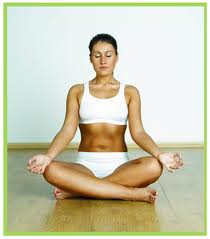
Yoga, breathing and relaxation

The body and mind need sometimes a break from the daily grind. In order to be able to live most harmoniously, you have to pay more attention on increasing awareness, the right focus and proper breathing. You must fix his gaze inward.

Awareness, focus and breath are three characteristics that blend into each other. If you've read the articles about perception , correct breathing and quantum mechanics , you understand that these three characteristics affect a greater whole. And when you understand this, it will be easier for you to achieve your goals, while simpler tackle the demands of society.

Life can be a stressful experience, and if you do not listen to your own needs, you will be forced to retire. Increased stress and more frequent disease is the body's way to speak out about the need to shift down a few notches, and change focus.

The following article is written by Berit Ostby and was first published in 1996.

Yoga, breathing and relaxation
Berit Ostby, 64, has been practicing yoga for half of them and had students in third. Otherwise she degree in folklore studies. She also likes to call himself a poet.

One of the reasons that stress and stress disorders are prevalent in the West, can be found in our tendency to turn their attention outward. We ran off and think first not of our physical and mental condition before we will have. In yoga, as in other eastern sports, has attention inward.

This is an unusual occurrence for us, and one could say it is alien to our culture. I prefer to call it complementary: It fills a void.

For you to understand what I am talking about, I ask you now to keep the attention of your index finger or your hand (the one you use most). Can you feel it? Do not give up right away.

In yoga we practice to hold and move your attention to our body. We're on a blanket on the floor and concentrate on each area. Next step is to learn to breathe deeper and quieter. In a basic breathing exercise direct our attention to breathing to utilize lung volume better, so we did as young children. Later, most of us bound breath and satisfied with a superficial stress breathing.

Breathing and relaxation are mutually dependent. As we become more aware of your body and breath, we are ready to relax.

We breathe deeply. On exhalation we send awareness of the body. We know at any tensions and tells about relaxation.

In the introspective attention is that we listen to the signals your body gives us. There are no questions about the performance or competition. What matters is the impact of each one, and it felt at all levels. The movements performed slowly, by respiration rate, and pain and fatigue limit is respected. Thus injury almost ruled out.

Instead, attention could we say consciousness. From a Western point of view sees yoga primary purpose seems to be a rehabilitation of consciousness. But consciousness is a difficult concept in the West. For science is the problem because it is subjective, it can not be tested and verified by experiments.

Yet awareness is an irrefutable fact, and maybe it will contribute to an expansion of the science concept. The American physician Larry Dossey looking forward to it when he says: Consciousness is medical science's forgotten dimension.

Also another realization we are trying to reach, which has a long history in Eastern cultures. We have opened the eyes of a whole and a connection between body and soul through the discovery of a number of psychosomatic disorders. In the East people have dualism never gained access. Thus it is natural breathing, which is little-known in the West, has a central place in Eastern philosophy. Breathing is distinctly psychosomatic.

Despite the theoretical difficulties going research on the effects of yoga in many places in the world today. In India has been conducting a national research laboratory. In England, The Biomedical Trust work with yoga since 1983. One is in the process of research, experiment, therapy and information, and medical training for yoga teachers.

Among the documented effects of yoga include reduction of blood pressure, improvement of muscular-skeletal disorders and relief of many stress-related ailments.

Yoga is excellent for health care, hospitals and schools. Yoga is free and requires no equipment. Yoga is preventive and curative. Risk and negative side effects are nil. We not only avoid injury, but consistently build up health. Yoga is positive and optimistic, stressing that we can make even the most for our health and wellbeing.

About doctors and staff did not even learn yoga, they can make patients aware of the beneficial effects of yoga. They can inspire patients to seek teacher or literature on yoga. In a time of queues in front of doctors and hospitals yoga can have a major task with its healthy self-care.

Berit Ostby

Eight advice for a good life:

Do not tie yourself to someone before it's too late (but make sure to have grandchildren)
Do not listen to black artists (doctors and meteorologists, insurers and adults)
Have a solid future perspectives: human development
Behind bread
Pick wild berries
Do not decide what you want to be
Do what you want (remember you are an artist)
Be happy!
»»  read more

Your body language can tell something other than what you say

Have you had such a conversation before, where body language says something different from what you are saying? Have you ever had one of those fake smiles that come in almost the speed of light? Has anyone tried to convince you of one thing, although both eyes and nervousness tells you otherwise?

Body language refers to nonverbal communication such as facial expressions, body movements, posture and movement of hands, arms and fingers. It has a significance and impact of what is being said. It tells the respondent what you are really saying.

Words and tone of your voice should be in harmony with your body language. These three things must correspond to a meaningful non-verbal speech.

When these three elements of face-to-face communication will support each other's body language convey most of the message.

Any suggestions on how body language can be improved

  • Keep your head up, maintain good eye contact, but do not stare.
  • Keep a slow pace, both in speaking and in your movements.
  • Relax and focus on your movements.
  • Sit or stand up straight.
  • Do not cross your arms or legs, relax your shoulders.
  • Do not stand too close or too far away.
  • Sincere smile and laugh.
  • Have a positive, open and relaxed attitude.

Remember:

  • Constantly checking what time it is or check fingernails, is a strong sign of boredom.
  • Pick the clothes or the down and see people give signals that you do not approve of their ideas and / or feel uneasy to say your honest opinion.
  • To put her hand stroking chin while looking at someone, you give some signals that you pre-judge their decisions.
  • Squinting eye can provide signals to someone you do not like them or their ideas.
  • Fake smile is another sign of deception. A genuine smile wrinkles the corners of the eyes and change the facial expression.
  • Leaning away from someone you love is a sign that you are bored or distracted. People usually leans towards people they like, and leaning away from those you dislike.
  • Oh do not look directly at the person you are talking to, indicating some degree of discomfort or lack of interest.
  • Crossing the arms is a sign of defensive resistance or self-absorption.
  • To show a slight attitude and negative messages.

Confidence and attitude
Place your feet a comfortable distance from each other, keep your shoulders pulled back slightly and keep your head up, greet the people with direct eye contact and a firm handshake.


  • To scratch the back of the head or neck indicates doubt and uncertainty.Relax posture with shoulders indicates low self-esteem. Always pull your shoulders back. Not only will you look more confident out, you will also feel safer.
  • Shaking or tapping the feet or fingers indicates stress, impatience or boredom.Fiddling on small objects is another sign of anxiety or lack of interest. Keep your hands comfortable rest for when you are in the presence of others.
  • Anyway, that reading non-verbal cues are difficult because body language can have multiple meanings. For example, the crossing of the arms or legs can mean that a person is cold or is relaxed. Moreover, it is important to remember that the body language does not have the same meaning in all cultures.

So these observations should be used only as a guide for changing your personal development. When you need to learn to communicate better on a non-verbal level, one must first familiarize themselves with what is customary and acceptable in society, so that you know what you need to adjust and how much :)
»»  read more

The body and the cells

The cell
A prerequisite for organic life to exist are cells. Your body is made up of approx. Billiard one of them. A cell is in itself a self-contained breathing unit with particular characteristics. It is dependent on the supply of energy, it can reproduce itself and has specialized tasks. In a philosophical perspective, a cell is considered as a micro individual in its own environmental body, just as a man is a subject in its environment.

The cell's outer membrane (plasma membrane) is a kind of skin that keeps in place the cell's internal organs (organelles). Central to the cell's nucleus. It contains genes (genes) that determine which properties the cells get. A cell has thus the ability to store information that it transmits from generation to generation. (Paradox: Can a cell doctrine? Could the store new information? Has it something that can be considered memory? Someone actually mean it.)

A cell is made up of proteins. It uses most of the energy it receives (glucose) to form protein. Building block of protein are amino acids, which is cleaved by digestion of the food we eat. The cell uses protein to grow in size (vips! you have more muscle), or to reproduce (vips! You have a new skin for wound You incurred).

The cells are very vulnerable to change, and an imbalance in the extracellular fluid will cause them to not work properly. This will eventually result in illness and death in the worst case (read about darkness and natural reactions ).

The body's anatomy and physiology is on this basis designed to ensure an optimal internal environment, in relation to the environment it operates in. affinity with Darwin's theory of evolution is as you might guess, very present. It's all about adaptation and survival.

The body

This creature is dependent on a stable internal environment to develop normally.
In the first nine months after conception, the cells ensured an optimal environment in the mother's womb. After nine months the embryo is too large and must support themselves. When it's time to say goodbye to the stable environment of the uterus and embryos are born. A new body is born!

If the body should be able to exist independently of the uterus, it needs more organ systems. The cells therefore haste. Over the course of nine months, they work like whipped heavy lift workers and builds an unfinished edifice consisting of:

  • Connective tissue system (including bones and skin)
  • The nervous system
  • The endocrine system (hormone production)
  • Muscles
  • Digestive system
  • The lymphatic system (including immune system)
  • The circulatory system (blood circulation)
  • Respiratory
  • Forplantningssytemet

Everything is sealed with the skin, a body which, in addition to acting as an effective protection plays an important role in the regulation of body temperature. The body is also equipped with a sensory apparatus, which is organ systems' (or body) connection to the external environment and that make it possible to orient themselves.

All organ systems involved in the effort to maintain homeostatic equilibrium and systems communicate with each other. The nervous system, and to some extent the endocrine system, ensures that communication is as efficient as possible, with the central nervous system (brain and spinal cord) as supreme commander.

In this way the body's organs into a unified entity created for one purpose: to maintain balance in the internal environment to the cells (the body) can survive in the environment (eg. Jungle). An imbalance or disease in any of the organ systems, will have an impact on the rest of the systems and the body as a whole.

Since the body is only half done when it is born, the environment they grow up in a particularly crucial for further development. The environment outside the womb must maintain the new body's needs at all levels, physically and mentally. It must provide for maintaining the homeostatic equilibrium.

The body is not fully developed until after about 20 years, and the homeostatic processes will have a lot to say about how the structure will be. If the homeostatic equilibrium is much disturbed, the body will get permanent damage and may never be complete. The body as a survival strategy thankfully ability to adapt, and it can adjust the homeostatic equilibrium in step with changes in the environment. This is called "survival of the fittest," and they (the individual or the species) that are unable to adapt to environmental changes will eventually die out.

In some future articles I'll let the topic be balance. Balance is, in my opinion, is a universal principle that applies to all levels of the universe. It is the condition of ALT actually working against, and that is the key to peace and happiness of the individual and the world.
»»  read more

Understanding yourself: Homeostasis - Part 2

"A constant internal environment is a precondition for a free and independent life. Statement holds so much. It describes perhaps all men in principle are trying to achieve: a free and independent life. The road to such a life is to maintain balance, the body is programmed to do.

To help start using their body system, and they are all largely controlled by an area of ​​the brain called the hypothalamus. Hypothalamus triggers a myriad of hormones, urges and instincts to reach the goal of balance.

A few years ago I read about a woman who was forced to urinate in front of onlookers fellow passengers on a bus tour. The bus driver refused to stop for toilet break, and she had no choice but to sit and pee in a paper cup in the aisle of the bus. Following Reviewed she relationship, and she thought it was a very humiliating affair.

This incident shows, however, that the body's built-in needs to maintain homeostasis, can get all other reasonable and moral inhibitions to depart. The basic needs to take complete control.

Hypothalamus, the boss of all bosses
The homeostatic equilibrium is controlled by a feedback system. In the same way that a thermostat providing feedback to a panel heater control unit for adjusting temperature and our nervous system feedback to the body control unit for adjusting the physiological processes. This center is a small area of ​​the brain called the hypothalamus.

Hypothalamus constitute less than 1 percent of brain cells, yet in command of the entire body's basic needs. It is mainly the hypothalamus that determines what the various organ systems should do. Physiological processes such as sleep, hunger, body temperature, blood pressure, and sexual arousal is controlled by the hypothalamus.

In addition to regulating our physiological needs, affects the hypothalamus largely the feelings that arise in us. Aggression, joy, sadness, love and fear are different emotions, and they all play a big role in how the rest of the body has.

In whole hypothalamus controls the body's organ systems in a precise interaction, where feelings and physiological needs of the framework for our behavior. To maintain homeostasis will always be in the bottom when we do something, in order to survive in a natural environment.

Homeostasis = motivation
When the hypothalamus receives signals that the internal environment of the body is about to change, warning lights start flashing. Here something must be done! Hypothalamus tells the rest of the nervous system that measures must be taken. This increases or decreases the amount of neurotransmitters between nerve cells. Meanwhile, the endocrine system order to secrete the necessary hormones into the bloodstream.

The changes in the nervous system and endocrine system resulting in the cells of the rest of the body has a reaction, and equilibrium is restored. We note this by, for example, the heart beats faster because your body needs more oxygen, or a feeling emerging in us. In a very life-threatening situation, the body's production of hormones and brain neurotransmitters reach a peak, and this will override everything else.

Since the body is dependent on maintaining the equilibrium of the cells to live, homeostasis the most basic form of motivation. The interior equilibrium is the same as good health, and good health is often the starting point for development beyond the basics. So everything starts with the satisfaction of physiological needs. To help generate different drives in the body that feels comfortable when they are satisfied. Satisfaction enable the body's reward system which consists of various happiness hormones. Thus we are further motivated to create balance in the body.

Life Energy and operates
All living organisms have self-preservation instincts that will ensure a good and stable internal environment. Self-sustaining operations created by the need to maintain equilibrium. Operation can be understood as an energy, a life force energy that causes cells in the body to work toward a specific goal: survival. If your life energy is low, the ability to survive would be less.

Drifter is something we primarily associate with animals. We say that the animals are controlled by drives, but this also applies to humans in large part, whether we want to or not. The need for equilibrium are present in each organism, and it is the operation which is the fundamental driving force.

When the hypothalamus marks a major change in the internal environment, set it in motion a fierce hormone production and activity of the nervous system. Hypothalamus triggers an inner drive, drives that have the ability to create feelings and behaviors that overwhelm our conscious thoughts and actions. Aggression creates anger and fear, sexual arousal enjoyment and thus a sense of happiness, loss of something vital creates sorrow. Our actions are then.

As we shall see in Part 3 of this article series can also be life energy psychic energy, mental power that is helping to make survival easier. For help using tanks (which basically is a collaboration between billions of brain cells) creativity. Creativity is, in other words, an ability that will help to achieve homeostatic balance.

Instincts and intuition
In close relation to the drives,'s instincts. Instincts is a kind of software that comes installed in the U.S., and that has been programmed by millions of years of natural selection. The instincts are in what is called animal brain, the oldest parts of the brain that we have in common with animals.

Instincts are the body's own innate wisdom which ensures that it has a minimum chance to survive in the environment it's going. This wisdom "knows" how the drives must be satisfied. It is part of the intrinsic power of which latent, and retrieved when it is mostly used for it. When instincts are moving, creating action we have no control over. It's like things floating by itself, and consciousness attaches to the side. They shall come into force without the intervention of conscious thought. The body just "do it."

Instincts are innate reactions, so-called fixed action patterns, which are triggered by stimuli from outside. A newborn child, for example, the ability to react with sucking movements when something gets pushed aside in the areas around the mouth. It does not have to learn it, and is an innate trait that is helpful in terms of food intake.

Fixed action patterns which are hidden in the most primary areas of the brain, but which will continue to affect our behavior even after the brain is fully developed. They are triggered by sensory stimuli, and how we perceive reality, our perception will therefore have an impact on the threshold of fixed action patterns yesterday. One such example is anxious, one which perceives reality as threatening, will constantly walk around and be on guard.

If you're wondering why someone suffers from collecting mania, an explanation would be that their fixed action patterns have been triggered. Experiences in life made ​​that they are afraid of getting too small, so they gather to ensure that they have enough. This is the same as that certain animals collect and store food for bad times. There is a built-action pattern.

Since our drives and instincts guided by the primary areas of the brain, we will experience urges and instincts that unconscious processes. The unconscious has its own extension in mind, and although the primary areas of the brain makes up at least half of the brain's mass, it is estimated that unconscious processes constitute 95 per cent of what goes on in the mind as a whole. This means that what happens in the primary areas of the brain, will have a huge impact on us. As when, for example, the hypothalamus triggers the production of melatonin and we are sleepy, the conscious experience of reality changes that eventually leads to sleep and the dream state.

In parallel with instincts, we have intuition . Intuition is the unconscious instincts, and unconscious mind power that is there to help us survive.

With practice, one can learn the body to act solely by urges, instincts and intuition. One can train themselves to let the inner power to take over their conscious thoughts and actions. When one is in such a mode, an easier experience a state of flow, and as you can read in this article , is floating a sure path to happiness. Are you having the flow of life, you have to train yourself to let the inner power to take over the body and the mind. The difficult thing is to trust your instincts and intuition, but they will never do anything that is detrimental. Therefore, trust your inner power!
»»  read more

Understanding yourself: Homeostasis - Part 1


Are you cold? Are you thirsty? Do you want to do? In such event has various control mechanisms in your body said on whether something is out of balance. The nervous system ensures that you'll have to take the necessary operations to maintain balance. You put on a jacket, drinking a glass of water, or take a ride on the pot. Mission accomplished! But you really had no choice. To maintain balance in the body is actually the most basic form of motivation.

A knowledge of the body's processes are smart if you want to develop. The more you know about yourself, the more you will have to find your weaknesses and work on those. This applies not only at the mental level, but also on the physical plane. Body and mind go hand in hand, and a comprehensive understanding is incredibly important.

I assume you sometimes think about your health. Humans generally have since time immemorial been keen to be fresh. A healthy person is considered more happy and more valuable than a sick person. He can also work more and create more value, so as to give of themselves and help even more people are doing well. This is important in a society.

Brief History

Being able to heal disease has been of interest as long as human history has existed. The concept of homeostasis is basically derived from physiology, but can be traced back to ancient philosophers Hippocrates' assumptions about the four essential body fluids (black and yellow bile, phlegm and blood). Disease was believed to result from an imbalance between these four bodily fluids.

In the middle of the 1800s, published the physiologist Claude Bernard's ideas on what he called "indoor environment". The theory was that the cells in the body rely on a stable internal environment for them to work properly and not die. The environment he was talking about is the fluid that surrounds the cells, known as extracellular fluid (ECV). This is eg. blood, lymph and plasma.

Besides might be on a constant level of volume and pressure, the extra cellular fluid having a constant temperature, constant mineral content (eg. Salt), constant content of water and a stable pH. The fluid must also be able to supply the cells the necessary energy, and transport waste products away from the cells. It must simply be a balance at all levels of ECV for the cells to function optimally.

Claude Bernard claimed so nice that "a constant internal environment is a precondition for a free and independent life." However, he had difficulty explaining how the body's systems failed to maintain this.

Walter B. Cannon (1871-1945)
The explanation would come a few years later, and in 1926 introduced the American physiologist Walter Bradford Cannon concept of homeostasis (equilibrium). In his book "The Wisdom of the Body", which he released in 1932, he explained how the human body is a self-regulatory mechanism controlled by a feedback system.

Homeostasis has been accepted as a doctrine of physiological processes, and is defined as the inner equilibrium which is necessary for the body's cells to function optimally.

Walter B. Cannon came up with a solution on how the body is able to maintain the important stable internal environment, despite the fact that it is located in an environment that is constantly changing. In the external environment, it is particularly temperature variable but also other environmental variations such as light, access to food and pollution.

The equilibrium is maintained through a partnership between the different cells, ie the body's organs.

The body and the cells

The cell
A prerequisite for organic life to exist are cells. Your body is made up of approx. Billiard one of them. A cell is in itself a self-contained breathing unit with particular characteristics. It is dependent on the supply of energy, it can reproduce itself and has specialized tasks. In a philosophical perspective, a cell is considered as a micro individual in its own environmental body, just as a man is a subject in its environment.

The cell's outer membrane (plasma membrane) is a kind of skin that keeps in place the cell's internal organs (organelles). Central to the cell's nucleus. It contains genes (genes) that determine which properties the cells get. A cell has thus the ability to store information that it transmits from generation to generation. (Paradox: Can a cell doctrine? Could the store new information? Has it something that can be considered memory? Someone actually mean it.)

A cell is made up of proteins. It uses most of the energy it receives (glucose) to form protein. Building block of protein are amino acids, which is cleaved by digestion of the food we eat. The cell uses protein to grow in size (vips! you have more muscle), or to reproduce (vips! You have a new skin for wound You incurred).

The cells are very vulnerable to change, and an imbalance in the extracellular fluid will cause them to not work properly. This will eventually result in illness and death in the worst case (read about darkness and natural reactions ).

The body's anatomy and physiology is on this basis designed to ensure an optimal internal environment, in relation to the environment it operates in. affinity with Darwin's theory of evolution is as you might guess, very present. It's all about adaptation and survival.

The body

This creature is dependent on a stable internal environment to develop normally.
In the first nine months after conception, the cells ensured an optimal environment in the mother's womb. After nine months the embryo is too large and must support themselves. When it's time to say goodbye to the stable environment of the uterus and embryos are born. A new body is born!

If the body should be able to exist independently of the uterus, it needs more organ systems. The cells therefore haste. Over the course of nine months, they work like whipped heavy lift workers and builds an unfinished edifice consisting of:

  • Connective tissue system (including bones and skin)
  • The nervous system
  • The endocrine system (hormone production)
  • Muscles
  • Digestive system
  • The lymphatic system (including immune system)
  • The circulatory system (blood circulation)
  • Respiratory
  • Forplantningssytemet
Everything is sealed with the skin, a body which, in addition to acting as an effective protection plays an important role in the regulation of body temperature. The body is also equipped with a sensory apparatus, which is organ systems' (or body) connection to the external environment and that make it possible to orient themselves.

All organ systems involved in the effort to maintain homeostatic equilibrium and systems communicate with each other. The nervous system, and to some extent the endocrine system, ensures that communication is as efficient as possible, with the central nervous system (brain and spinal cord) as supreme commander.

In this way the body's organs into a unified entity created for one purpose: to maintain balance in the internal environment to the cells (the body) can survive in the environment (eg. Jungle). An imbalance or disease in any of the organ systems, will have an impact on the rest of the systems and the body as a whole.

Since the body is only half done when it is born, the environment they grow up in a particularly crucial for further development. The environment outside the womb must maintain the new body's needs at all levels, physically and mentally. It must provide for maintaining the homeostatic equilibrium.

The body is not fully developed until after about 20 years, and the homeostatic processes will have a lot to say about how the structure will be. If the homeostatic equilibrium is much disturbed, the body will get permanent damage and may never be complete. The body as a survival strategy thankfully ability to adapt, and it can adjust the homeostatic equilibrium in step with changes in the environment. This is called "survival of the fittest," and they (the individual or the species) that are unable to adapt to environmental changes will eventually die out.

In some future articles I'll let the topic be balance. Balance is, in my opinion, is a universal principle that applies to all levels of the universe. It is the condition of ALT actually working against, and that is the key to peace and happiness of the individual and the world.
»»  read more

Lime Chicken - a method description

Introduction:
Calcified tendinosis represents a clinical challenge to both patient and treat. For large Scale formation in the subacromial space so the patient will in many cases end up with a acromionreseksjon to create more space.

A method that is constantly evolving but now sailing up as a good option, lime chicken. The method is that you under sonographic guidance and local anesthesia, enters shoulder tendon with an injection needle. It is then pumped into numbing agent (fast-acting local anesthetic). The air flow from inside the chalk formation ensures that the cup that dissolves flushed into the syringe and the level of calcium in the tendon reduced.

The treatment is concluded by conducting a dry needling of residual calcium remaining in the tendon for the body to break this down even, should it be necessary. In order to avoid a sharp inflammation of the subacromial bursa after the procedure so inserted 1 ml kenacort (cortisone). This ensures that the patient does not get severe pain after the procedure, and since it goes into slime bag so it does not prevent macrophage task of eating the chalk formation after surgery or healing, the tendon tissue after dry needlingen.

The patient comes to the control after 4-6 weeks, considering the need to repeat the treatment.

Lime Chicken:
Lime Chicken is a method that is increasingly well documents in research. There are described several methods, both with one and two injection needles. If one uses the technique with one needle so it is important to place the needle correctly in classification. It is also essential for the result that the calcifications are of such type that it can be dissolve. This can in some cases decide in advance in connection with the ultrasound scan. Chalice indeed appear as a by this time, structure in otherwise normal tendon tissue, and it provides some "shadow" in the picture that indicates that it has a harder consistency than the rest of the tendon tissue.

Calcifications that have stood for a long time can provide a powerful shadow on the ultrasound images. These calcifications are often impossible to resolve with rinsing, and you must change the technique to dry needling as described later in this article.

Method with 1 needle:

Pull up about 4 ml numbing agent in a 10-20 ml large syringe. Select a gross injection needle of sufficient length to reach the chalk formation under sonographic guidance. Needles of 50 mm is suitable often. The thickness of the needles should be 19-21G. Less serious injection needles tend to clog with lime enters the calcifications and the method will not work as intended. Make sure you start to inject some numbing agent on the way in when you pass bursae and controls the needle into the chalice. This way you avoid clog the needle and the patient will be sedated enough so that the interference is not experienced pain. There is no need for anesthesia before surgery.

Once you have placed the needle in the cup so it is important not to lead the needle too far. If one causes the needle through the cup and into the tendon tissue on the other side, so you create an output of the solution. It will make it impossible to create enough pressure in chalk formation to get this to flow into the needle and into your syringe.

Do not be impatient if it does not come any scale back the syringe immediately. Pump gently and rhythmically the sprayer. Tap and release immediately. Slowly but surely, they will loosen calcium crystals from tendon tissue and follow the solution back into the syringe. It is crucial that you now hold the rear end of the syringe below naletuppen so that gravity can do prevails.

Keep on with the technique until you notice that it comes out more lime. Then you can gently try to change the position of the needle and continue. When you can no longer get out more calcium you need to do an evaluation if you have removed enough to end the procedure. If you are successful then optimally remove the needle, and ends the procedure of putting 1 ml kenacort (cortisone) mixed with 2 mL Marcaine (local anesthetic) into the subacromial bursa. This is also under sonographic guidance to ensure proper placement. Due to the procedure ends with a cortisone injection in the slime bag because it will leak some lime into this during the procedure, and this creates a powerful bursitis. To prevent the patient is in pain after treatment, so you set the quick-acting cortisone. This does not appear to damage the healing, the injury or the body's ability to absorb the rest of the cup.

If you closed the lime chicken not feel that you have gotten out enough calcium, or parts of it are hard to wash out, so you can stop the procedure by performing a sonographic guided dry needling of residual calcium in the tendon. This causes the cup to fragment so that the body can break down the rest.

Method with 2 needles:

Method with two needles are relatively similar with one needle. The only difference is that one uses one injection needle for pumping the liquid to loosen the lime, and build up the required pressure inside it, and a second needle end of the cup. Method with two needles requires that you bring a colleague who can keep one syringe during surgery.

Dry needling of soner classification
There are a variety of different shapes and phases of calcified tendinosis. Some are like a lot of toothpaste inside a restricted area of ​​the tendon tissue. Other shapes may be hard as bone tissue, while a third form appears scattered lime deposits over a larger area of ​​the tendon tissue without forming a common structure. The first form is often suitable for lime chicken as mentioned earlier in the article. The second and third form of hard Scale formation or scattered deposits suited to dry needling.

The method is that you go in with a needle attached to a 5.2 ml syringe. The needle may be 40mm-50mm long and thick 21-23G. When the needle passes into the tendon tissue as you carefully inject about 2-3 ml of numbing agent around limestone formation. One lets the needle stand patient and wait about 5 min before gently leads needle into and out of limestone deposit the tendon so that this fragment sufficient for the body to absorb it. The trauma caused to the tendon tissue by this method appears to create a reaction that causes the body to break down the calcium tissue and absorb this.

The procedure is concluded by injecting 1 ml kenacort (cortisone) were mixed with 2 ml of Marcaine (local anesthetic) in the subacromial bursa. Use a new needle and syringe for this so as to avoid spraying lime from the needle into the bursae.

Control or 4-6 weeks
All patients who have undergone a dry needling or lime chicken must come to the control after 4-6 weeks. They will then undergo ultrasound examination to identify the need for further treatment. Some need 2-3 treatments to get rid of all the cup, while some patients need only the first procedure to get satisfactory results.

Why must the cup away?
It is a controversial issue of the chalice in a shoulder tendon needs to be removed to obtain satisfactory results. One can see that research has shown that ESWT treatment of calcified tendinosis is an effective treatment compared with placebo treatment rarely leads to the cup is gone.

A general rule for assessing lime importance for the clinical outcome, whether it creates a thickening of the tendon tissue or not. The cup is that a deposition in the tendon, but does not create any lack of space under the acromion as it is not necessary to remove it.

But if the cup gets the tendon to bulge considerably and secondary creates a structural impingement, so it is easier to argue for taking this away.

As an alternative to the acromion resection
One justification for operation with acromion resection is failure to respond to conservative treatment. Included in the conservative treatment is considered here MTT, Redcord, ESWT and / or injection therapy. If acromion also has a type 2 or 3 form that creates a lack of space, then surgery may be the only solution for the patient. But there are many patients who have developed a lack of space due to a calcified tendinosis. These patients do not necessarily need surgery to be good. If one can use simple methods as mentioned above in this article as with the need to remove the acromion roof away.

One can also argue that it is worth a try to take away the cup before choosing surgery. The interference with lime chicken or dry needling is little invasive and provides a shorter rehabilitation. It is also considerably cheaper treatment and relief specialist health / hospitals that have already blasted capacity.

Rehabilitation is vital for performance
After successful treatment where lime is removed from skuldersenene, so expect further action from a physiotherapist. This group of patients often have had long-term pain and impaired function, and the function will not automatically back by the loss of the structural cause of impingement in the shoulder.

The patient must be referred to a physiotherapist for rehabilitation of shoulder function and treating additional concerns already that one often finds in chronic shoulder pain. Since the space under the acromion is now improved so you will now have a greater chance for successful rehabilitation of these patients.
»»  read more

Best Pregnancy Massage Techniques For Stress

The breast massage

First sign of pregnancy you feel your breasts gorging vitality, as Lady Nature already provides feed the small man who looks after the three seasons to come for transparency, to guess more of feeder vessels.

At the center of your breasts, like a bud hatches, develops mammary gland. They reveal heavier, firmer and often more sensitive. The nipples more color because the dermis thickens to prepare for the baby sucks. Taking care of your breasts daily be a guarantee of comfort and aesthetics for your bust and as a gesture health. Standing or sitting comfortably, explore massaging the breasts.

It allows a gentle approach and gradual breast. Heat a small amount of oil Massage Stretch Marks in the palm of your hands. Apply the oil from the base of breasts collarbone down to the base of the neck, encompassing areolas. Sure to distribute the oil evenly over the skin.

The intensity of the support depends on your hand your sensitivity. Imagine your breast as a wave. Your hands are riding the wave up and down (see Figure 1). Use  hand alternately right to the left breast and vice versa.

Drainage: to reduce tension's breast.

To prime the pump system lymphatic glands awakening nodes:

  • Place the tip of your fingers on the eight sternum at the level of the nipples between both breasts (see Figure 2) and stimulate the focal point in rotating in the direction of clockwise. This is an opening of breath. Take the opportunity to breathe deeply two or three times, slowly through the mouth.


  • Then cross your hands and slide down armpits, thumbs placing forward to the clavicles (see Figure 3) from circles under the armpit: press up towards the armpit, release down. If this is possible, you can highlight the support in amount to massage the lymph nodes. Indeed, the tensions mammary relax better when draining lymph nodes and the ample breathing.


  • Then place both hands on top of each other the flat palm over the areola. Exert and firm to gentle pressure to flatten the breast, the breast and subsequently reassemble pressed against the neck. Release smoothly. Do this 2-3 times pumping?

In addition to the Stretch Mark Massage Oil, you can use the cream herbal remedies. Massage areolas from the 7th month with this cream strengthens the skin. It prepares the baby sucks for "feeding welcome" recommended by midwives whatever your choice to breastfeed or not.

»»  read more